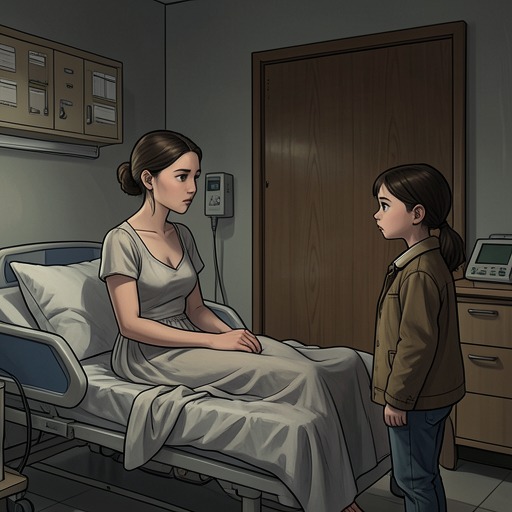
Maxwell
The Art of Racing in the RainMaxwell is Eve’s father, Trish’s husband, and Zoë’s maternal grandfather. He enters the story as part of the closely matched pair Enzo calls The Twins, and becomes a central opponent in Denny’s struggle to remain Zoë’s primary parent. Maxwell presents his campaign as a defense of Zoë’s welfare, but his own words eventually expose a more tactical purpose: he intends to seize an opportunity created by a criminal accusation against Denny.
Identity and Household
After Zoë’s birth, Maxwell and Trish stay in the family home to help care for Eve and their new granddaughter. Enzo calls them The Twins because they look alike, wear coordinated outfits, and seem to match one another’s habits: the same artificially colored hair, similar sweaters or polo shirts with khaki pants or polyester slacks, sunglasses worn in tandem, and even Bermuda shorts with tall socks pulled to the knees. The resemblance is more than a matter of clothing in Enzo’s account; the pair also share a smell of plastics and petroleum-based hair products. His comic, sensory portrait makes Maxwell part of a recognizable unit, although the couple’s similar appearance does not mean they respond identically to the conflicts that follow.
The first conflict concerns Eve’s decision to give birth at home. Maxwell and Trish repeatedly admonish her, arguing that home birth endangers the baby and that responsible parents should choose a prestigious hospital and expensive doctors. Eve counters that the statistics favor home birth for a healthy mother and that her experienced team of licensed midwives would recognize distress early. Her parents refuse to yield. When Denny returns, their scrutiny shifts from Eve to him, and Maxwell describes the family’s circumstances as a run of bad luck in a tone Enzo hears as gloating. The change of target is telling: Maxwell’s disapproval of Denny quickly becomes part of the household’s larger struggle over who is competent to care for Eve and Zoë.
Judging Denny’s Contribution
Maxwell’s criticism of Denny takes on an explicitly practical form when he asks what Denny contributes to the family, contrasting Denny’s role with Eve’s earnings. The question casts their marriage in terms of work and provision, and treats income as evidence of a partner’s value. Denny’s actual work in the household complicates that judgment. He cuts back his hours to take Zoë to preschool, reads to her after dinner, helps her learn numbers and letters, and assumes the grocery shopping, cooking, and cleaning so Eve can avoid stress. He performs these tasks without complaint, though caring for Eve and their child leaves less room for the playful, physically affectionate time he had shared with Eve before her illness.
Maxwell’s assessment also sits against the less visible work of care that Denny delegates rather than abandons. He asks Enzo to stay beside Eve when Denny takes Zoë out so she will not hear her mother’s cries of pain. Enzo remains at Eve’s bedside or curls up beside her on the floor, where she sometimes holds him close and tells him about the pain. The contrast matters: Maxwell measures Denny’s contribution through an accusation about money, while the household’s daily arrangements show care being divided among paid work, parenting, domestic labor, and the companionship Enzo provides.
Illness, Care, and Family Decisions
When Eve is seriously ill, Maxwell and Trish offer to keep Zoë for a weekend after Denny has spent two weeks maintaining a strict routine around work, childcare, meals, and hospital visits. Their offer gives Denny a brief respite, but it also precedes a more consequential question about where Zoë should live. As Eve’s condition worsens, Maxwell argues that Zoë should stay with her mother and grandparents, framing the arrangement as valuable time between mother and daughter. He also invokes Trish’s feelings, suggesting that Denny would be cruel to object. The appeal is emotionally forceful because Denny must weigh his place in the family against Zoë’s opportunity to be with Eve.
Denny does not simply decide for Zoë. He takes her into the backyard and asks what she wants, explaining that her mother would like her to stay with her grandparents. Zoë recognizes that her grandparents want her too, but reassures Denny that he will not leave her there forever. Her answer shows both attachment and awareness of the adults’ competing wishes. Maxwell’s influence is present in the proposed arrangement, but the child’s understanding is not reducible to the adults’ claims about what is best for her.
The Custody Campaign
After Eve’s death, Maxwell and Trish present their custody proposal as the result of discussions they say they had with Eve and among themselves. Maxwell describes their household as warm and stable and points to the upbringing and privileges they could provide. He insists that the proposal is not meant as an insult to Denny’s fathering, but as a decision in Zoë’s best interest. The language is measured and protective; its implication is that financial security and household stability should outweigh Denny’s claim to raise his daughter.
The legal action makes that implication concrete. Maxwell tells Denny that they are suing for custody and advises him to get a lawyer if he does not have one. Denny reacts as if struck, falling back into a chair while still holding the papers. Maxwell then attacks Denny’s reliability as a parent: he asks who will care for Zoë while Denny is at work or away racing, and accuses him of having hidden Eve from doctors until she was near death. Denny denies hiding her from doctors. The accusation is therefore presented as Maxwell’s charge, not as an established fact; in the scene it functions as an argument for why Denny should not be trusted with Zoë.
Zoë’s Wishes and Maxwell’s Motives
As the dispute continues, Maxwell’s account of his motives becomes less protective and more openly strategic. In a conversation with Trish, he says Denny was not good enough for Eve and is not good enough for Zoë, and argues that the grandparents can give the child a better moral, financial, and family upbringing. But when Trish questions the timing of a damaging report about Denny, Maxwell says he will seize the moment if Denny has been caught in compromising circumstances. Trish still maintains that Denny is not a bad person. The exchange reveals a conflict within the grandparents’ position: concern about the life Zoë might have with them coexists with a willingness to exploit Denny’s vulnerability to win custody.
Zoë, meanwhile, states her own preference directly. She tells Denny she wants to come home and live with him and Enzo, and insists that he tell the lawyers and judges so. Denny explains that the decision is more complicated, but her repeated demand makes clear that the legal contest concerns a child with a definite view, not merely a future being arranged by adults. When Denny explains that someone has accused him of doing something terrible and that he must prove his innocence in court, Zoë asks whether Grandma and Grandpa were responsible. Her question is strikingly direct; Denny denies that they made the accusation, while acknowledging that they know about it.
Maxwell’s narrative significance lies in the gap between the language of care and the tactics he is willing to use. He has helped care for Eve and Zoë, and the stability and privileges he offers are part of his stated case. Yet his criticism of Denny, his custody suit, and his readiness to exploit the accusation show that he also treats the family crisis as an opportunity to secure control over Zoë’s future. Against that effort, the story places the child’s plainly expressed wish to return to Denny, complicating any claim that adult confidence or material security alone can define her best interests.